About Us
Who We Are
Accellera Systems Initiative is an independent, not-for profit organization dedicated to create, support, promote, and advance system-level design, modeling, and verification standards for use by the worldwide electronics industry. We are composed of a broad range of members that fully support the work of our technical committee to develop technology standards that are balanced, open, and benefit the worldwide electronics industry. Leading companies and semiconductor manufacturers around the world are using our electronic design automation (EDA) and intellectual property (IP) standards in a wide range of projects in numerous application areas to develop consumer, mobile, wireless, automotive, and other “smart” electronic devices. Through an ongoing partnership with the IEEE, standards and technical implementations developed by Accellera Systems Initiative are contributed to the IEEE for formal standardization and ongoing governance.
See the 2019 Accellera Overview Presentation >
Our Mission
At Accellera our mission is to provide a platform in which the electronics industry can collaborate to innovate and deliver global standards that improve design and verification productivity for electronics products.
The purposes of the organization include:
- Provide design and verification standards required by systems, semiconductor, IP, and design tool companies to enhance a front-end design automation process.
- Collaborate with our community of companies, individuals, and organizations to deliver standards that lower the cost of designing commercial IC and EDA products and embedded system solutions, as well as increase the productivity of designers worldwide.
- Encourage availability and adoption of next-generation EDA and IP standards that encompass system-level, RT-level, and gate-level design flows.
- Collaborate with the electronic design community to deliver standards that increase designer productivity and lower the cost of product development.
- Provide mechanisms that enable the continued growth of the Accellera Systems Initiative user community including SystemC, Universal Verification Methodology (UVM), and IP-XACT.
- Standardize technical implementations developed by Accellera Systems Initiative through the IEEE.
Benefits of Membership - A Video from Our Chair

A Rich History of Standards
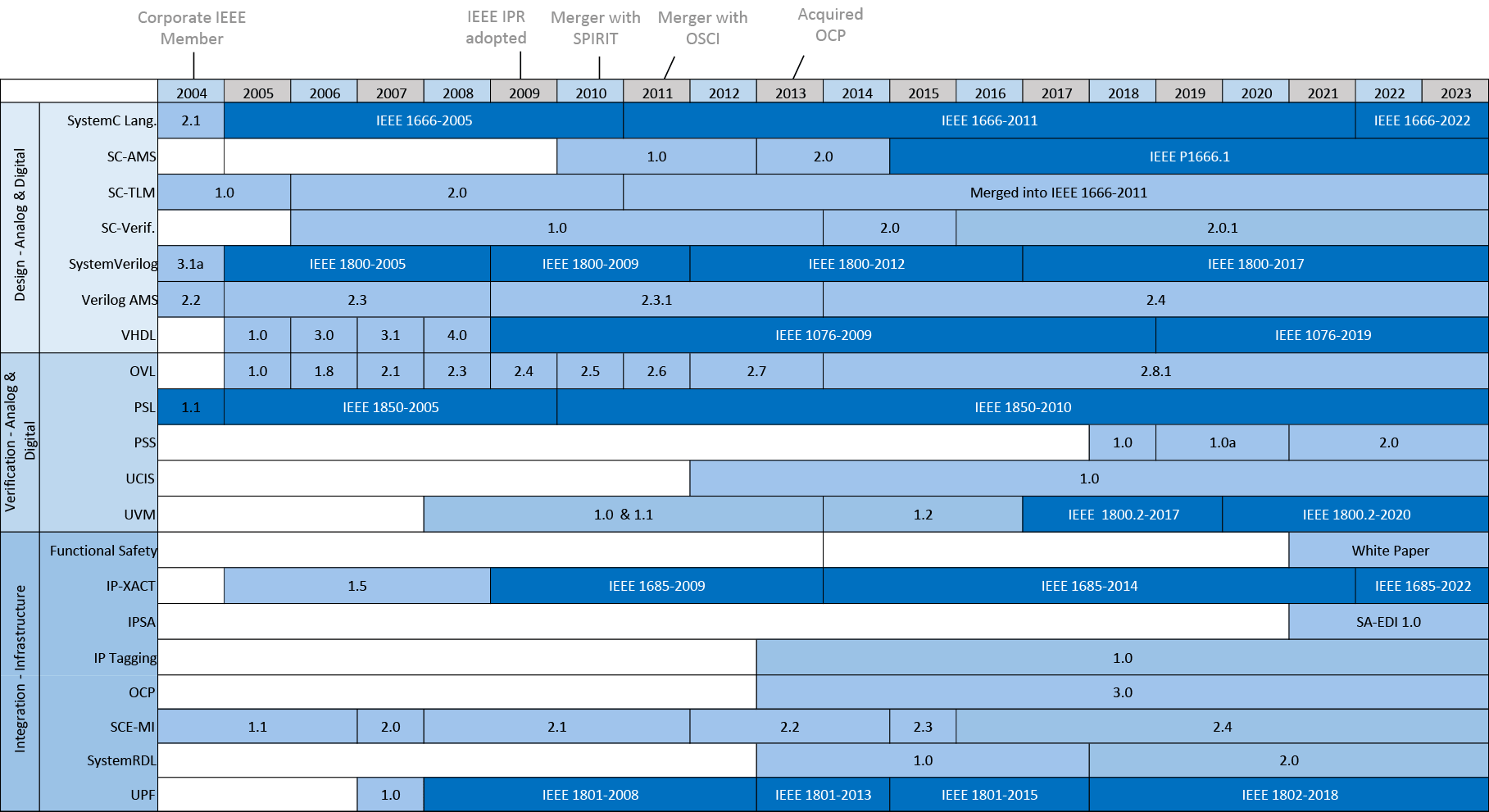
Accellera Systems Initiative has evolved into the robust organization it is today to meet the needs of its members and the EDA and IP community. Starting with the merger of OVI and VHDL International (VI) to form Accellera Organization, it has since joined with The SPIRIT Consortium and then with the Open SystemC Initiative (OSCI) to become Accellera Systems Initiative.
Accellera Standards Success
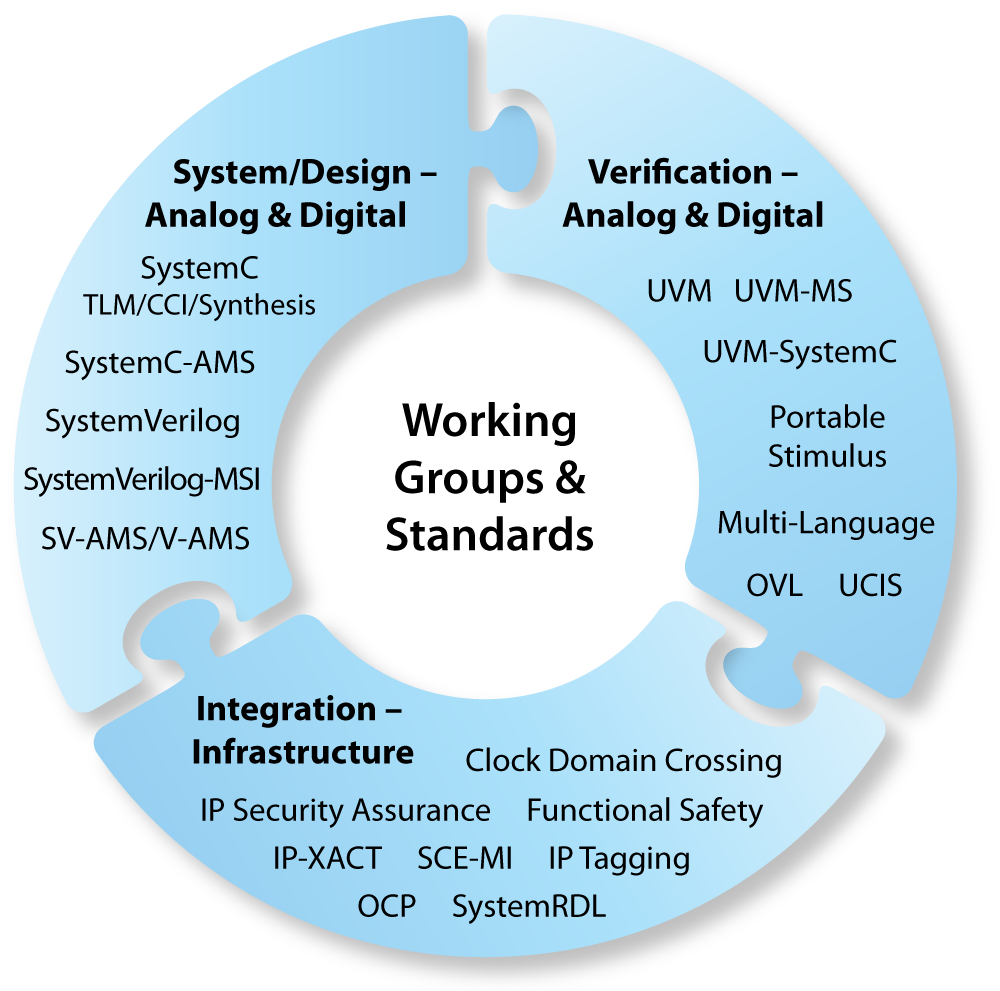
The Accellera Ecosystem
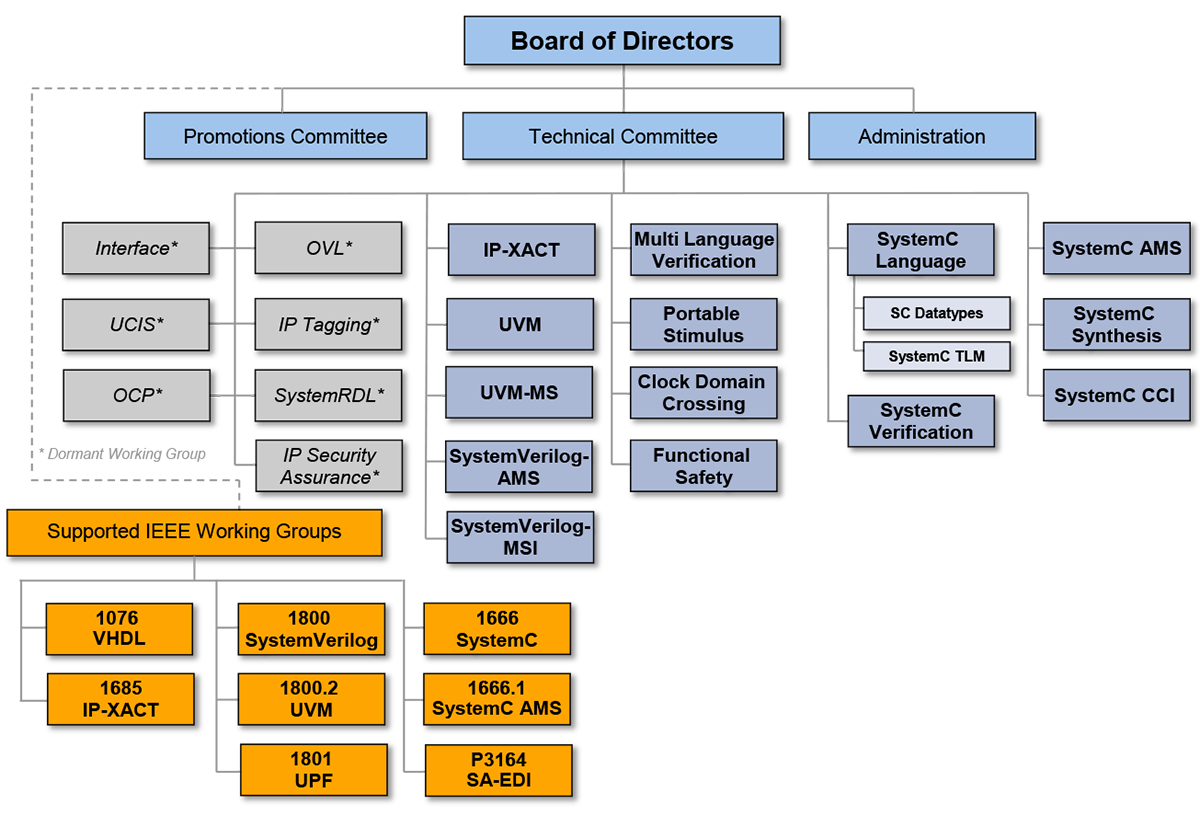
Accellera Structure